
What do monsters have to do with design? According to Cheri Flewell-Smith, everything.
Design has always had its monsters. Think of the shopping mall, the freeway interchange, the algorithm that decides who gets a mortgage and who doesn’t. All were designed, all reshaped our world, and all carried consequences we’re still living with.
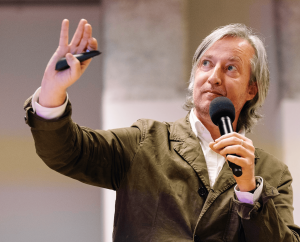
At DMT25, Cheri Flewell-Smith — Senior Lecturer at Torrens University, founder of GOOD DEEDS LAB, and woman behind Women in Design Education Network (WIDEN) — stepped into this lineage with a Talk that was equal parts manifesto and cautionary tale. Reclaiming Antonio Gramsci’s famous line:
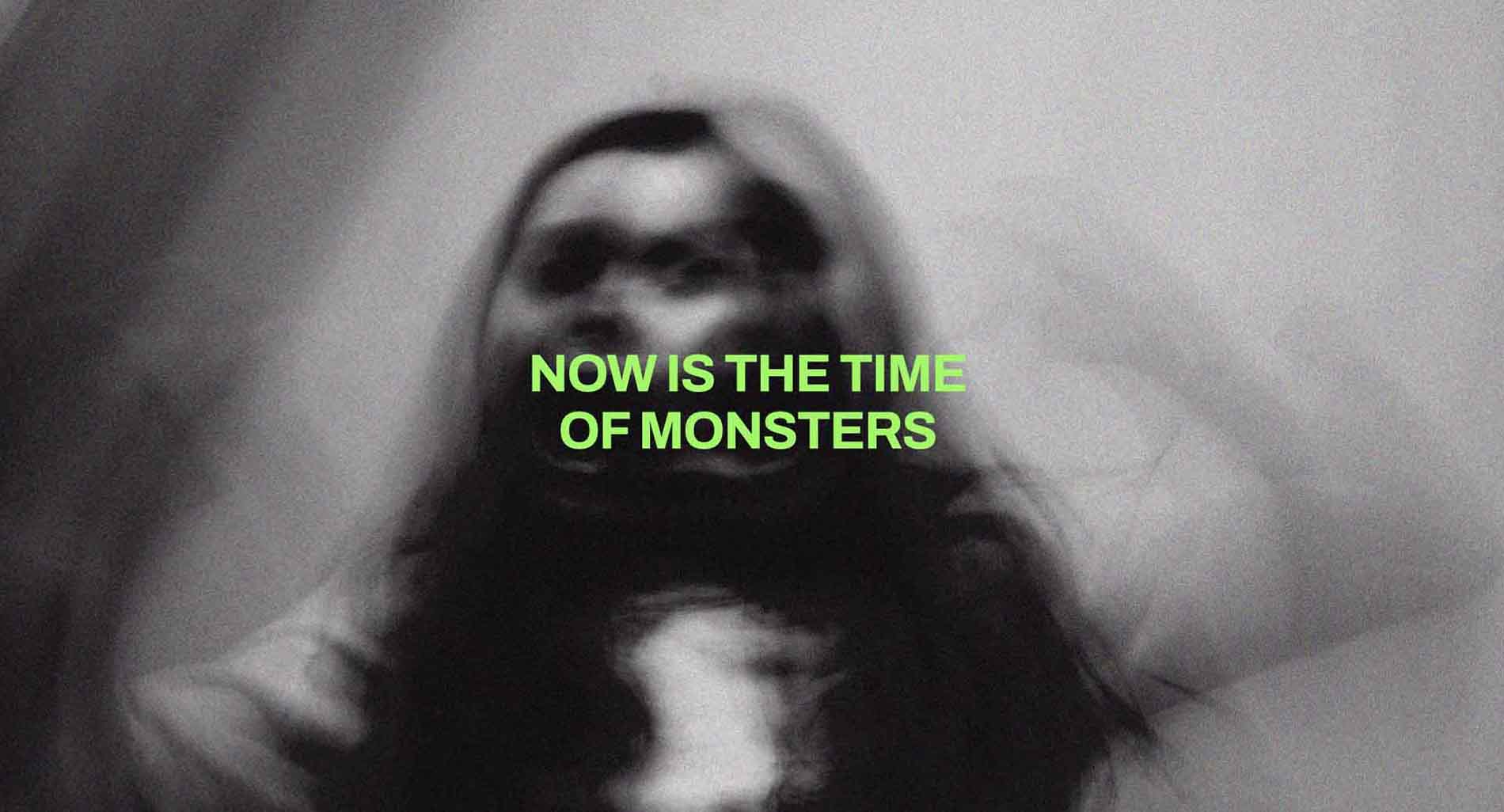
“The old world is dying, the new world struggles to be born: Now is the time of monsters.”
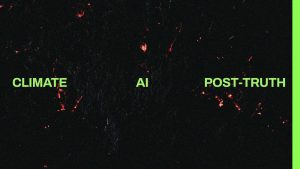
She asked us to see AI, Climate, and Post-Truth not as distant abstractions but as the monsters we’ve already invited into our living rooms.
And then came the turn of the knife: the real monsters, she argued, are us. Designers. Creators of worlds both beautiful and terrifying. The question is no longer whether we’ll create monsters, but what kind of monsters we’re willing to be.
I sat down with Cheri to explore what it means to design in monstrous times, and why embracing our inner monster might be the only way to shape futures worth inhabiting.

1. Monsters in Plain Sight
Cheri, you have argued that we are living in a “time of monsters. “ For readers who were not in the room at DMT25, can you explain what you mean by that, and why you think this framing matters for design today?
Cheri’s answer:
When I say we’re living in a time of monsters, I’m pointing out that many of the scariest things in our world were designed with good intentions, or crept in slowly and quietly – but we were so distracted by the new, the shiny and disruptive that we didn’t notice the shifts happening right beneath our feet.
I’m highlighting how these aren’t abstract forces, but they’re systems with teeth. If we think about it, we live in a world where algorithms decide more and more what kind of access you have. A world of alternative facts and contested truth. A world of rising temperatures and endless ‘unprecedented events’ that no longer shock us. Towns flattened by fire. Empty supermarket shelves. Manipulative news cycles.
They sound like big, headline events, but we’ve become so conditioned by them that they fade into the everyday. That’s the danger: the monsters aren’t always the ones we expect, or we no longer see them as monstrous because they’ve become woven into our everyday lives, rituals, and ways of being.
2. Colonizers, Arsonists, Shapeshifters
You’ve personified AI as a colonizer, Climate as an arsonist, and Post-Truth as a shapeshifter. Why these archetypes, and how do they help us as designers make sense of challenges that often feel too large or abstract to grasp?
Cheri’s answer:
The sad truth is that collectively, we’re tired of hearing about AI, Post-Truth, and Climate Change. Framing these as archetypes speaks directly to the heart of the power they wield. The archetypes give designers a language to articulate the potential power and destruction of these ‘monsters’.
It’s essential to remember that design is never neutral, and neither are these monsters. Framing them as archetypes ultimately encourages us to consider who benefits, who pays, and who hasn’t even been considered, as well as the broader context. It gives designers permission to step back, pause, and think critically. Often, we’re so waylaid by deadlines and what’s right in front of us that we don’t get the space to think about the times we’re living through and how we’re contributing to them.
3. Threshold Problem
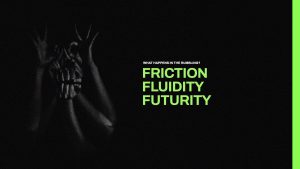
You talk about design existing at a threshold, a space of friction, fluidity, and futurity. To me, that sounds both exhilarating and exhausting. How can designers work productively in that liminal zone without either retreating into comfort or rushing to resolve what shouldn’t be resolved too soon?
Cheri’s answer:
As designers, this is where we live. We’re problem solvers and circuit breakers. This is our wheelhouse. It’s our job, not to wait until the ground feels stable, but to help others cross safely. For designers, thresholds are important because they allow us to think about what the best solution is for the problem we’re solving. Or whether we’re addressing the right problem?
Of course, there’s always a temptation to want to resolve a problem too fast or focus on the veneer. We need to resist that by setting clear boundaries around exploration. Define clear checkpoints, and allow time to pause and also reflect on what’s worth carrying forward into the next phase.
One of the themes I’m interested in exploring more in my design practice is not framing problems with ‘what if’ but also working with ‘what is’ in a way that encourages a deeper understanding, such as examining how we got here, what were the systems and policies that created these conditions? Do we need to look at those first?
The real challenge is allowing time to think before jumping in. That’s the beauty of thresholds. Our job is to honor them.
4. The Monster in the Mirror
The twist of your Talk is that designers themselves are monsters. What do you mean by that? And what changes when we stop imagining ourselves as heroes or problem-solvers and instead accept our more monstrous side?
Cheri’s answer:
I don’t think it’s as black and white as that, and therein lies the dilemma for designers. Designers don’t just solve problems; we ultimately build worlds that real people have to live in. And sometimes those worlds have unintended consequences.
Of course, that doesn’t make us the villain in the story, but it highlights the responsibility we carry. Entertaining the idea that the spaces, services, and systems we design can both harm or heal forces us to look in the mirror. The point isn’t to deny the monster…but to decide what kind of monster we want to be.
5. A Provocation for Tomorrow
If you had to leave emerging designers around the world with one “monstrous” provocation (something to keep them awake at night but also to sharpen their practice), what would it be?
Cheri’s answer:
I’d say this: design for the edges. The periphery is usually the dangerous place; it’s where things are unstable, unexpected, and easy to ignore in your design processes. If you only ever design for the middle – for consensus – because it’s easy and safe, you’re designing for averages, and what’s already accepted or been done.
In part, we already do this when we test for outliers, but what if we began with them, letting the margins set the boundaries of the brief, rather than the averages or typical bell curve? I’d like to see design used less as an economic or risk mitigation tool, but recognized for its potential to rewire systems and create futures that don’t exist yet.
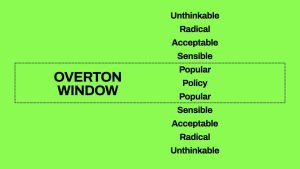
Politicians and policymakers use the Overton window to steer public opinion – mostly for their own gain. Instead, what if designers used it to take control of the narrative to push ideas that shape a ‘design-first world ’?
The question I want to leave you with is: how do we use design to expand what people believe is possible, rather than keeping them hooked (read: trapped) in old, outdated systems and beliefs? How do we move ideas from unthinkable to plausible, from out-there and radical to common-sense?
Ultimately, I’m asking designers, how do we use design to shape the kind of world we actually want to live in? Now, that’s the kind of monster worth becoming.
A Scary Ending
Cheri Flewell-Smith’s monsters are not the ones that hide under the bed, but the ones we’ve already built into the world. Her argument is not a warning so much as an invitation to acknowledge design’s monstrous nature, and to wield it with honesty, imagination, and care.
If the old world is dying and the new one struggles to be born, then designers, like monsters, inhabit the in-between. The challenge is not to deny our monstrosity, but to decide whether it will be generative or destructive. And perhaps that is the most human choice of all.
***
Want to know more about Cheri Flewell-Smith and her Monsters? Then give her profiles a peek.
Women in Design Education Network

*All images in this article were provided by Cheri Flewell-Smith.