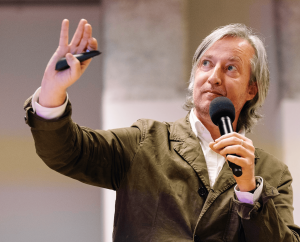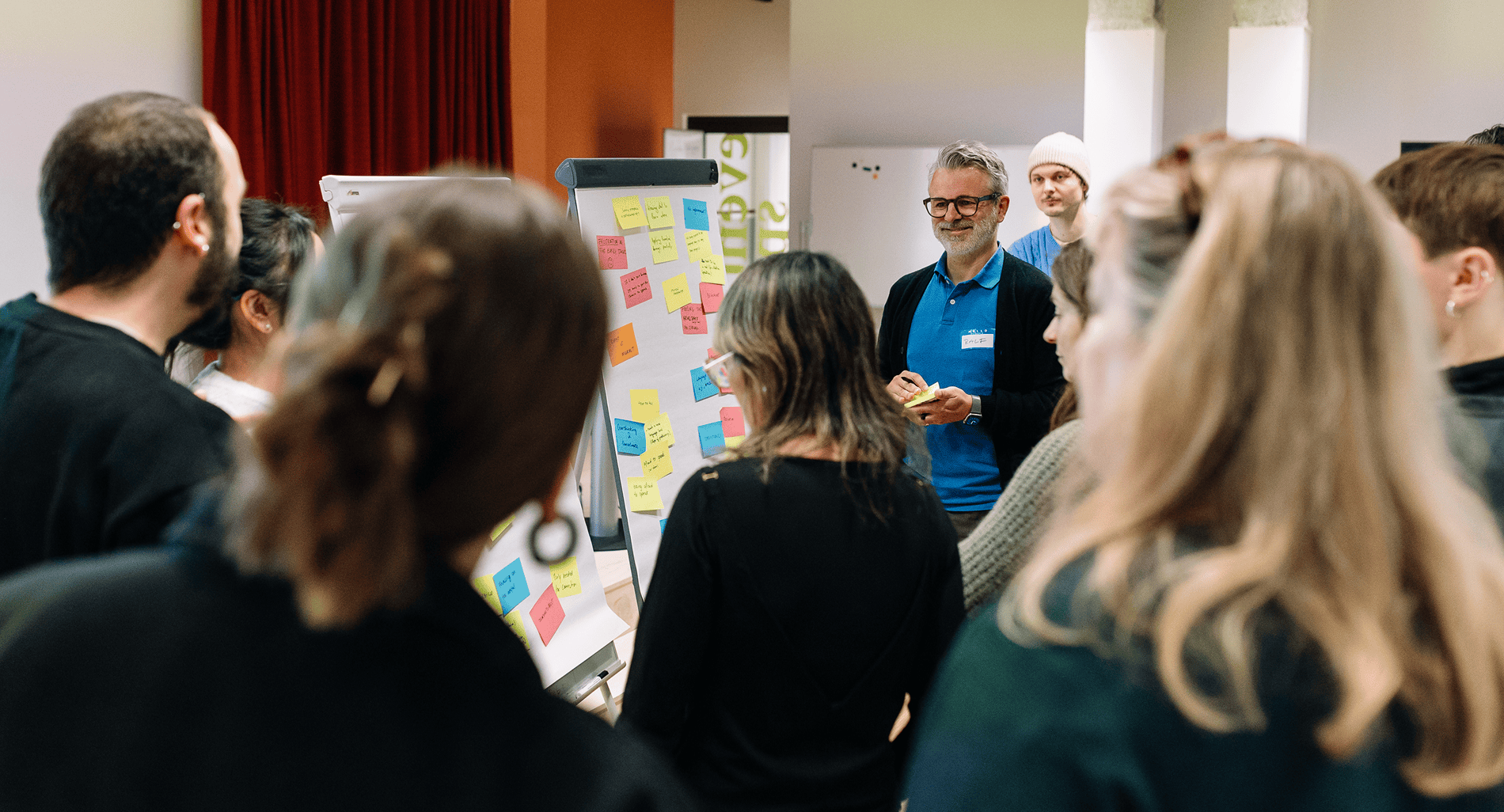

The Masterclass: Designer, Forge Your Future Society was kicked off by Ralf Chille, Head of Product Design at Babbel, who knows a thing or two about the importance of learning and correct communication to permeate and integrate into society optimally.
We caught Ralf after his session to ask him a few questions.
What can product designers learn from designing for languages?
Designing for language learning is all about empathy and inclusivity. It’s deeply personal—you’re not just solving a usability problem, you’re meeting someone in a specific moment of need, whether that’s preparing for travel or trying to settle into a new country. That makes it very different from, say, optimizing an e-commerce journey.
When you design for language learning, you’re also designing for culture, context, and emotion. Some learners don’t even start with the same alphabet. In Europe, we rely on the Latin script, but other learners may be accustomed to Arabic or Hindi and might need to learn a new foundation first. So you can’t just drop content; you have to start slow, and that creates complexity. But it’s also inspiring.
Designers usually aim for simplicity, fewer interactions, and smoother flows. But here, that logic doesn’t fully apply. Language learning is repetitive by nature. We call it “trainer fatigue”—repeating can get boring. But it has to feel good, usable, and worth coming back to. For designers, it’s about building meaningful, motivational touchpoints that help learners stick with the experience and feel part of something. It’s not just pushing the curriculum. It’s a design exercise in storytelling, in rhythm, and in facilitating a habit-building challenge.

Are there any unique pedagogical insights that we can draw inspiration from?
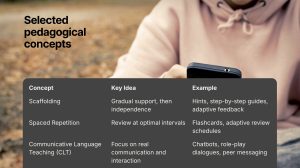
Absolutely, especially when we are talking about learning in a self-study app. One thing we use at Babbel is spaced repetition, which works well and can be automated in a learning app. It’s a pedagogical method that times when and how content should repeat, so that it lands in the long-term memory of learners. But beyond that, there is microlearning or bite-sized learning. Breaking lessons into small, meaningful pieces. Because, let’s be honest, we are in constant competition with everything else on your phone.
The real challenge is balancing attention span with meaningful learning. Sessions shouldn’t be too long, but they can’t be meaningless. As product designers, that’s where we come in. We need to negotiate between attention realities and pedagogical needs. That is the space where design can have a real impact.
And there’s also this cultural idea of how we think learning should be conducted, how we were taught in school, but that’s not necessarily true anymore. There are different ways of learning now, and we need to adapt to that. It’s not about forcing traditional classroom methods into digital tools. It’s about designing for how people actually learn today.
What are the similarities between game design and language learning design?
So, there’s this concept of intrinsic motivation. That’s key. You need to be motivated to play a game, just like you need to be motivated to learn a language. It doesn’t happen automatically. The big difference is that games come with built-in incentives and mechanics, which makes it easier to keep players engaged.
In language learning, we have started using similar mechanics, such as streaks, awards, and achievements, because they keep the learner captivated. At Babbel, we try to stay a bit more balanced than other language learning apps. But we still use elements like streaks, because they help learners to return.
Another thing, when you design language learning “trainers,” people need friction to learn. A designer might say, “Let’s simplify this!” But if it’s too easy for the user, then they don’t actually learn anything. Learning requires you to pause, think, and then make a choice. The learner needs to be challenged a little; that is where the reward comes in.
It’s about goals and progress. It’s a journey. And when that is visible and meaningful, users stay motivated. So, yes, there is a lot of crossover in the UX patterns.
In the age of AI, how do you think it will impact the future of product design? And what does the future landscape of human behavior and design skills look like?
Yes, things are changing fast. Everyone is experimenting with AI. As designers, we need to learn how to spark creativity using AI tools. They are great at accelerating ideation, iteration…but we’re also giving up some control, right?
Normally, we design every detail, we draw, we measure, we prototype. But, with AI, we product designers prompt, get the results, and then pass them through another tool. We don’t control each element. It’s a mindset shift. It’s a behavioral shift. We need to become comfortable with that, we need to learn how to direct AI, and how to collaborate with it.
Right now, AI is like a personal assistant. But I think there’s real potential in putting AI at the center of the collaboration, like how Figma changed the game with multiplayer mode.
Imagine a design environment where AI is helping generate ideas, actively structuring thoughts, offering perspectives none of us have considered, and helping us write better briefs. That is where we’re headed. But to get there, designers need to shift their mindset, be comfortable letting go of some control, be fluent in prompting, and even understand the basics of how code is generated.
It is not about becoming engineers, but about becoming smart sparring partners with the machine. That is where the precision, creativity, and collaboration of the future will live.

In Short, What We Learned from Ralf Chille:
Designing for language learning pushes product designers to rethink simplicity. Not as fewer clicks, but as creating emotional, inclusive experiences that build habit and connection. From spaced repetition to cultural cues, ‘learning’ design requires deep empathy, rhythm, and storytelling.
Ralf shared how techniques from pedagogy and game design, such as microlearning, progression loops, and meaningful friction. Can enhance digital learning journeys.
According to Ralf, AI is not just a tool, but a future collaborator in product development. To thrive, designers must adapt by embracing new skills, letting go of control, and learning to co-create with intelligent systems.